
“One writes out of one thing only – one’s own experience… I have written about being a negro… only because it was the gate I had to unlock before I could hope to write about anything else.” – James Baldwin
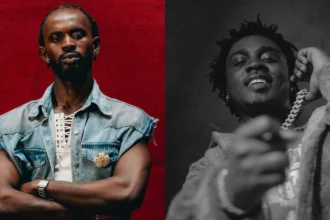
When it comes to creating art or any form of work, personal experience serves as alchemy. To request a creator to detach their lived experiences from their creativity is to deny them the authenticity that fuels their inspiration. As James Baldwin opined, Kweku Smoke’s work is steeped in his own personal experiences which are familiar to many urban Ghanaian youths. His latest album, “No Days Off’’ released on Friday September, 2026 is a brilliant attestation to this approach.
The Essence of No Days Off

The album’s curtain-raiser, “Soul Healer” provides the thematic outline for the 13 songs that constitute “No Days Off“. Kweku Smoke carves an aspirational narrative of struggle and ambition with gospel reflections that are easily digestible and recognizable by his fans as expressed by the first three songs on the album.
Kweku Smoke’s greatest strength isn’t his prolificity at crafting albums that capture the hopes, aspirations, and anxieties of the Ghanaian youth. It is his ability to cultivate a fanbase that finds truth and resonance in his message. In this regard, Kweku Smoke has become a gateway to understanding the anxieties and aspirations of the urban male youth.
Critics and Authenticity
His critics have pointed to the repetitive themes about struggles, dreams and faux religiosity as overbearing. They often cite his newfound success should serve as a source material for his music. Others want him to produce more pop-oriented or radio-friendly songs that fans can include in their party playlist. Though both criticisms are valid, Kweku Smoke cannot be faulted for sharing personal experiences over pristine beats. It’s worth noting that his previous projects feature records that soundtrack parties.

The Struggle, Dream And Prayer
The hopes and anxieties of the young Ghanaian are explored across “Survivor“, “Bra“, “Mmreniho” and “Power House“. These records, specifically “Survivor” and “Bra“, are arguably the album’s spine. It is on these two songs that Kweku Smoke’s qualities as both a storyteller and songwriter become evident. Whereas “Survivor“confronts the fragility of success and life, Bra is an invocation of God’s grace explored through faith, divine protection and favour.
On “Survivor“, he narrates the story of a young man whose nascent success was interrupted by tragedy. The last lines of the second verse reference the unfortunate tragedy of June, 2015, giving the song an added layer of emotional weight. If Agyekum was the fulcrum of his previous release “Kweku Jesus”, “Survivor” occupies a similar position on this album. Its haunting, solemn and riveting quality makes it one of the album’s defining moments, while its narrative captures the precarious intersection of ambition, success and mortality.

The Gains After The Pains
“Bombele“, the radio friendly track, is a celebration of success. The title, a slang referring to a large bag of cash is vibrant, celebratory, energetic and obvious roof raiser. Built around spacey, striking snares and muffled bass drums, Kweku Smoke’s melodic flow punctuated by quotable lyrics like “over 40 blings around my neck/Yall ain’t gon know peace when I make it” sums up the perks after the pain. It’s difficult to imagine an audience standing still when “Bombele” is being performed.
The Feature List
Features are relatively limited on “No Days Off” but that did not affect the overall outcome of the project. Dikoo appears on “Mmereniho“, delivering an emotive verse that provides a contrasting colour to the song. Kwesi Arthur’s name alongside a record often generates anticipation. On “Power House“, Kwesi Arthur delivers the hook of the song instead of the rap exchange that fans might have anticipated. Lasmid appears on “Faith“, the radio friendly, gospel-esque record, delivering a catchy, sing-along hook. And I dare ask: Was that Bosom P-Yung’s chanting voice on the title track?
Verdict
“No Days Off” scores highly on lyrical themes, production, features and song sequencing. The album has no skips or fillers giving it a cohesive feel. Each song contributes to the overall narrative through introspective reflections, struggles, faith and the peaks and valleys of uncertainty. Kweku Smoke’s growth as an artist and album crafter is evident on this project. His declaration on “Soul Healer” that: “I can bet it on my life/I’m going nowhere” is a comforter for his fans and a cue for his critics to accept this fact.
By: Culart (SwayeKidd)