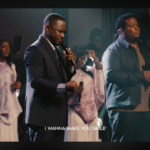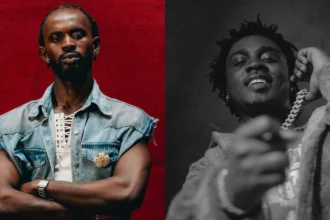
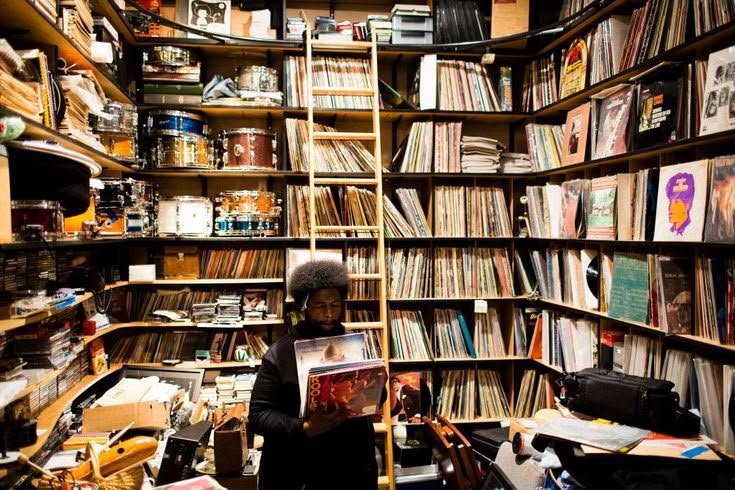
In recent developments, catalogue and catalogue acquisition have become a dominant conversation and trend in the music business, lately in Ghanaian music. Ghana Music has never been more visible, yet beneath this cultural footprint lies an economic tension. Our music ecosystem is experiencing a quiet but steady “catalogue drain.” Increasingly, our artists, especially A-listers, are opting to sign off their catalogue and the perpetual rights to their life’s work to music investors, particularly foreign investment funds and specialized acquisition companies.
While these transactions are often framed as major financial milestones, they are rarely born out of simple opportunism. Instead, they are highly rational decisions made within a fundamentally broken domestic value chain. To understand why, we must look beyond individual motivations and examine the broader structural reasons. When a Ghanaian artist sells off their catalogue, the conversation that follows tends to focus on the individual: why did they do it, was the price fair, did they understand what they were giving up? Those questions matter, but they sit on top of a bigger one that gets asked less often. Why does selling keep looking like the smart move? The answer has less to do with any one artist’s judgment and more to do with three parts of our music economy that are not working the way they are supposed to.
In 2026, no one doubts that Ghanaian music is prolific and though music is fleeting, our output has been steady with real audience, both local and diasporic. However, what has not kept pace is the machinery that is supposed to turn that output into income. The core issue within Ghana’s creative economy is a stark disconnect between cultural impact and structural infrastructure. The financial plumbing beneath the music ecosystem has simply not kept pace with the creativity driving it.

Artists regularly find themselves in a precarious position with their music being played across national radio, featured heavily in regional nightlife, and used to anchor digital trends, yet the domestic systems designed to collect and distribute that value yield negligible returns. Because local infrastructure is fragile, foreign companies with data-driven tracking, global licensing networks, and established institutional relationships are able to monetize Ghanaian music far more efficiently than local entities can.
Consequently, a troubling reality is that the wider Ghanaian music travels, the less its long-term financial equity remains in the hands of the people and institutions that created it.
Streaming hasn’t become the income source it should be
Streaming is meant to convert cultural relevance into long-term, predictable income. In Ghana, that has not fully happened yet. High data costs, inconsistent broadband outside major cities, and a still-developing culture of paying for music mean the streams that actually generate revenue are concentrated among a smaller, more urban audience than the music’s real reach would suggest.
There is also a less visible issue in that most people don’t fully understand where streaming money goes. Publishing royalties, the portion GHAMRO and other CMO is positioned to collect, typically make up only about 15 to 20 percent of total streaming revenue. The remaining 80 to 85 percent sits with the master recording, which falls outside GHAMRO’s mandate entirely. An artist can have real reach on TikTok, radio and playlists and still see very little of it reflected in local earnings, particularly if the distributor or label involved is based abroad.
GHAMRO’s own figures point to a serious gap. By the organisation’s own account, more than 90 percent of broadcasting stations in Ghana either don’t pay royalties or don’t submit accurate usage reports. Without reliable data on what’s being played and how often, fair distribution becomes difficult to calculate with any confidence, and that uncertainty is part of why artists have grown skeptical of the numbers they’re given.
There have also been periods when GHAMRO’s own operating licence was withheld, limiting its ability to collect and distribute royalties even as music continued to be used across the country. Combined with ongoing questions about membership transparency, payment delays, and how much collected revenue goes toward administration rather than artists, it’s understandable that many musicians see the collection system as something to work around rather than rely on.
Rights education hasn’t kept up
Despite several attempts to equip artists, session musicians and producers with knowledge of music business through workshops, many still have little idea of how music rights actually work. The difference between publishing and neighbouring rights, between a master and a composition, between performance and mechanical royalties are still not known to many players. That said, if you plan to be an active player in the music ecosystem, you need to make it a basic requisite to know these dynamics.
Musician unions and rights advocates have documented cases of session players who performed on well-known records and received nothing, not through any deliberate wrongdoing, but because the work was never registered or the collecting society never joined.
That gap tends to show up most clearly when a catalogue buyer arrives. A company offering cash and a contract is often negotiating with someone who has little frame of reference for what they’re agreeing to: whether the deal is a permanent transfer or a time-limited licence, what territory restrictions mean in practice, whether there’s any path back to ownership later, and whether they’ll ever be able to see how the songs are performing financially. A catalogue is often the most durable financial asset a musician will ever hold. Sold without that context, it becomes less of a considered decision and more of a transaction made at a disadvantage.

These issues do not exist in isolation. Weak streaming capture, an underperforming collection system, and a lack of rights education reinforce each other, and together they make selling look like the only reliable way to get paid.
Streaming revenue is fragmented and hard to capture locally, particularly on the master side, where most of the money sits. Royalty collection is undermined by broadcasters who don’t pay and a collecting society whose own capacity has been inconsistent. Many rights holders lack the legal support or institutional trust to build long-term income from what they’ve made.
Into that gap, a foreign or specialist catalogue company offering upfront cash and professional global reach can look like the most dependable option available. Each deal that follows quietly shifts decisions about sync placements, reissues, sample clearances and pricing away from Accra and into portfolios managed elsewhere.
It’s worth looking at this alongside what is happening in neighbouring markets. Nigeria, South Africa, and increasingly Kenya have been building more integrated domestic systems, linking telcos, streaming platforms, rights organisations and legal education in ways that give their artists a genuine alternative to selling. Ghana’s trajectory looks different: exporting the music itself while importing the financial and legal infrastructure that determines who actually profits from it.
The effects extend past individual artists. As more Ghanaian catalogues move into foreign ownership, Ghana’s position in continental conversations about licensing rates, streaming standards and archival preservation weakens. Decisions that shape how Ghanaian music is priced and preserved end up made further from the people the music belongs to.
None of this is really about artists making poor choices in my opinion. It’s about a system that hasn’t given them a good alternative. Music is one of Ghana’s most significant cultural assets and historical records. Ensuring that creators can sustainably retain ownership of their work is not about restricting global commerce. I think it should be about building a domestic environment robust enough to value, protect, and sustain its own creators for the long term.
Three things would change that: giving GHAMRO the technical and legal capacity to track usage and hold broadcasters accountable, building rights education into music schools and union onboarding so artists understand what they’re signing before they sign it, and creating policy conditions where holding onto a catalogue is more financially viable than selling it.
Until those pieces are in place, the artists selling their catalogues today aren’t making a mistake. They’re responding, reasonably, to the system in front of them.